George Frederic Watts Portrait of William Morris, 1870
"The BBC Symphony Orchestra and Sir Andrew Davis head into visionary territory, with a new piece by Ian McQueen. The search for the land where 'none grow old' guides the twists and turns of William Morris's 'The Earthly Paradise'. Ian McQueen's work for chorus and large orchestra evokes the poem's extraordinary world, surges with erotic charge, and conjures up Morris's magical vision of Iceland's landscape and sagas."
"Scored for a large orchestra and choir, this has been commissioned by BBC Radio Three. It is dedicated to Stephen Jackson and the BBC Symphony Chorus, to celebrate the chorus's 80th birthday. There are four movements, which refer to the life of the great Victorian poet, designer and political activist, lasting about 30 minutes.
'Earthly Paradise' will be broadcast on April 13th at around 7.45 pm [UK time] on BBC Radio Three.
Ian Mcqueen will introduce the piece live in the studio."
** Update April 13th: The broadcast will be available for seven days at the link below. The Earthly Paradise segment begins at about the 54 minute mark with interesting commentary from Fiona MacCarthy and Ian McQueen. http://www.bbc.co.uk/programmes/b00rwwhq
~~~~~~~~~~~~~~~
William Morris in Iceland an article by Fiona MacCarthy LINK
The Literary Pilgrimage an article in Iceland Review LINK
LINK to a PDF file with a listing of works in the exhibition.
***************
The Pre-Raphaelites and Italy
Ashmolean Museum, Oxford, UK 15th September 2010 to 5th December 2010 LINK
The exhibition curators are Claudio Spadoni, Colin Harrison and Christopher Newall.
***************
A wonderful glimpse of some of the works
that are being shown in Ravenna. (The Telesanterno commentary is in Italian.)
***************
Danielle Mitzman, a British freelance journalist based in the north Italian town of Bologna, recently spoke with two of the exhibition curators. She writes, "... a major exhibition, 'The Pre-Raphaelites and the Italian Dream', has opened at MAR, the Museum of Art in the north Italian city of Ravenna. It will run until June before moving to Oxford’s Ashmolean museum in September. Appropriately a joint Anglo-Italian venture, it looks at the connection between the British Pre-Raphaelite movement and the Italian artists – as their name suggests, before Raphael - who inspired them."
** Listen to the interview at this LINK. ** (It is in English.)
"Much more than a dream, Italy was a veritable obsession for the young British artists who went on to found the Pre-Raphaelite Brotherhood. With its "The Pre-Raphaelites and the Italian dream. From Beato Angelico to Perugino, from Rossetti to Burne-Jones", the Ravenna Art Museum (MAR), stages the first ever Italian exhibition devoted to this artistic movement.
It was in the mid 19th century that a group of British artists, guided by William Holman Hunt, rebelled against what they considered formulaic academic mannerism, choosing to take Italian painters from the medieval and pre-renaissance period (before Raphael), as reference. Of the works from this period the Pre-Raphaelites admired the brilliance of the colors used, the intensity of expression, the references to the natural world, and the spontaneous approach to art which they deemed to have been abandoned by the artists who succeeded Raphael.
The exhibition route commences with two rooms containing works by Beato Angelico, Taddeo di Bartolo and Perugino. The exhibition is divided in two sections: one exploring the Pre-Raphaelites interest in Italian painting and art; the other dedicated to the British artists' representations of the country's landscapes and historic buildings. Fascinated by Italy and its history, members of the Pre-Raphaelite Confraternity attempted to direct British painting towards more authentic and less conventional subject matter, far removed from the cliché imposed by the academies. Although, today, the works of the Pre-Raphaelites appear anything but revolutionary or ground-breaking, at the time of their creation, they provoked scandal in Victorian society, to such an extent that they are thought by many to represent the first avant-garde movement in art.
One of the founders of the Pre-Raphaelite movement was Dante Gabriel Rossetti, son of an Italian immigrant, who chose the works of Dante Alighieri as one of the principal themes of his artistic discourse. The exhibition includes a series of splendid paintings by Rossetti and other, lesser known artists, inspired by the Divine Comedy and the life of Dante. Ample space is dedicated to other themes dear to the Pre-Raphaelites, such as that of the woman destroyed by unrequited, tragic or adulterous love."
John Ruskin Italian Village, 1845 (not included in the exhibit) LINK
"The passion for Italy and its artistic heritage, which animated these artists, emerges in the works of John Ruskin who, during his many journeys through Italy studied with attention the artistic treasures of the Italian peninsula, recording them in the form of meticulously accurate drawings in the conviction that, in this way, he would somehow be able to save them from degradation and preserve their beauty. Ruskin even financed the journeys to Italy of a series of artists and students from Oxford University, so that they could follow his example and realize drawings and paintings of all the most beautiful Italian monuments. The resulting collection of works is one of the most interesting aspects of the Ravenna exhibition. The exhibition concludes with Edward Burne-Jones' sketches of the mosaics realized for Rome's Church of San Paolo dentro le Mura, mosaics inspired by the Byzantine masterpieces still visible in the basilicas of Ravenna." (Courtesy: ItalyTraveller)
Dante Gabriel Rossetti Dante Designs an Angel on the First Anniversary of the Death of Beatrice, 1853
From an article by Rachel Spence about the exhibit: "Intensely romantic and spiritual, yet rooted in the language of the common man, Dante’s verses furnished the ideal subject matter. Rossetti, who was also a poet himself, both translated and illustrated many of the Tuscan’s verses. Of several watercolours on show here, the most historically significant is the earliest – “Dante Designs an Angel on the First Anniversary of the Death of Beatrice” (1853) – which brought the young painter to the attention of Ruskin for the first time. The critic hailed it as “the most perfect piece of Italy I have ever seen in my life”."LINK
(*Update April 13th ... another article about the exhibit. LINK)
Some works by Beato Angelico and Perugino.
Beato Angelico A Rome Reports TV News Agency video from April 2009
Pietro Vannucci (Perugino) A video by Ricardo G. Silveira
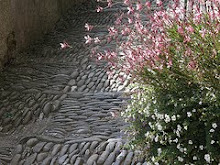
The photographs shown above were taken at the Groninger Museum in Groningen, The Netherlands during the Waterhouse exhibition. Copyright for the photographs belongs to: 1. 'AbAberson' 2. & 3. 'Sandori'
If you haven't seen them before, or would like to enjoy them again ...
RTV Noord shares works by Waterhouse in London before the opening of the Waterhouse exhibition at the Groninger Museum (December 2008). Na 'Fatale Vrouwen' hele tentoonstelling Waterhouse (English & Dutch - about 3 minutes long) - LINK -
Documentary about John William Waterhouse from AVRO Close Up in association with the Groninger Museum (1 April 2009). De betoverende vrouwen van John William Waterhouse The enchanting women of John William Waterhouse (English with Dutch subtitles - 52 min.) http://player.omroep.nl/?aflID=8573842
La Belle Iseult, 1858 "Bequeathed by Miss May Morris 1939" Image courtesy of the Tate Gallery, London.
"The inspiration for this painting was Thomas Malory's 'Morte d'Arthur' (1485), in which Guinevere's adulterous love for Sir Lancelot is one of the central themes. The model is Jane Burden who became Morris's wife in 1859 ... She was 'discovered' by Morris and Rossetti when they were working together on the Oxford Union murals, the subject matter for which was also taken from Malory. The painting ... is a splendid expresion of the intense medieval style prevailing in Rossetti's circle in the late 1850s, with its emphasis on pattern and historical detail. This is Morris's only completed oil painting." - courtesy the Tate Gallery
Morris wrote about Jane and the painting, "I cannot paint you, but I love you."
It is such a beautiful work, though. And so are the studies below.
I do agree with what Margaret wrote about La Belle Iseult at her blog, The Earthly Paradise: "I adore this work. While Rossetti was much better at capturing the sensuous qualities of Jane and his other models, I think Morris' painting does an incredible job of envisioning a creative, romantic space. It gives one quite the "scope for the imagination" -- don't you think?" ~ Indeed.
Drawing of Jane Burden by William Morris, 1858 Courtesy Morris Online Edition - Link
Study for 'Iseult on the Ship' by William Morris, c. 1857 Portrait of Jane Burden. Pencil and ink. Courtesy of William Morris Gallery. London Borough Waltham Forest.
~~~~~~~~~~~~
According to information at the Tate Gallery website, La Belle Iseult is currently on display at the Victorian and Albert Museum in London.
William Morris was born in Walthamstow in East London on March 24, 1834 - 176 years ago today.
"When William Morris (1834-1896) died at the age of sixty-two, his physician declared that the cause was "simply being William Morris, and having done more work than most ten men." This multi-faceted man was at one time or another (and sometimes simultaneously) a designer and manufacturer of furniture, stained glass, tapestries, wallpaper and chintzes; an accomplished weaver; a pioneering preservationist; an active Socialist and social reformer; a successful poet and novelist; and in his last years, the founder of the Kelmscott Press. Yet all of these activities were of a piece, unified by several threads in the tapestry of Morris's life.
Garden of Delight
One continuity, dating from early childhood, was his love of nature, evidence of which may be found in the fond natural descriptions of his letters and poetry, the patterns of his tapestries, and the vining borders of the Kelmscott book. There was also his passionate devotion to the Middle Ages and to everything they represented; romantic Medievalism informs Morris's literary output, as well as his arts and crafts work and the books from his Kelmscott Press.
From The Wood Beyond the World
A third thread was his belief that it is impossible to separate esthetic issues from social and political ones. Morris often contrasted the social organization of the Middle Ages with the present condition of England, which led him to advocate a complete reform of industrial society. At first, he advocated an overhaul of the flawed esthetics of the age and later, realizing that such reform alone was insufficient, a thoroughgoing political revolution.
Sketch by Walter Crane William Morris speaking at a meeting of Hammersmith Socialist Society
One must also mention his conviction that it was impossible for an artist to exist outside the context of a community. Thus Morris's homes in London's Red Lion Square, Red House in Kent, Kelmscott House in Hammersmith near London, and Kelmscott Manor in Oxfordshire became centers of communal artistic and intellectual endeavor. Morris's talent for friendship was another continuity in his life. Though he was a somewhat solitary child, as a university student he formed enduring attachments to the Pre-Raphaelite artists Edward Burne-Jones and Dante Gabriel Rossetti. These close friendships influenced his choice of a life devoted to art. ..."
William Morris and his close friend Edward Burne-Jones
"William Morris was born in Walthamstow and the Gallery is housed in his former family home ‘Water House’, where he spent his formative years in the 1840s and 50s. The Gallery was established by the Borough of Walthamstow (now the London Borough of Waltham Forest) and was opened in 1950 by the then Prime Minister, Clement Attlee." - The Friends of the William Morris Gallery
"On 10 [April], the BBC Symphony Orchestra will present the world premiere of 'The Earthly Paradise', a setting of prose, poetry, and sayings by William Morris composed by Ian McQueen."
"The search for the land where "none grow old" guides the twists and turns of William Morris’ 'The Earthly Paradise'. Ian McQueen’s new work for chorus and large orchestra evokes the extraordinary world of the poet, surges with erotic charge and conjures up Morris’s magical vision of Iceland’s landscape and sagas."
Isabella; or, The Pot of Basil (completed in 1818)
A Story from Boccaccio
LIII. And she forgot the stars, the moon, and sun, And she forgot the blue above the trees, And she forgot the dells where waters run, And she forgot the chilly autumn breeze; She had no knowledge when the day was done, And the new morn she saw not: but in peace Hung over her sweet Basil evermore, And moisten'd it with tears unto the core.
LIV. And so she ever fed it with thin tears, Whence thick, and green, and beautiful it grew, So that it smelt more balmy than its peers Of Basil-tufts in Florence; for it drew Nurture besides, and life, from human fears, From the fast mouldering head there shut from view: So that the jewel, safely casketed, Came forth, and in perfumed leafits spread.
LV. O Melancholy, linger here awhile! O Music, Music, breathe despondingly! O Echo, Echo, from some sombre isle, Unknown, Lethean, sigh to us—O sigh! Spirits in grief, lift up your heads, and smile; Lift up your heads, sweet Spirits, heavily, And make a pale light in your cypress glooms, Tinting with silver wan your marble tombs.
2. John William Waterhouse Isabella and the Pot of Basil, 1907 Private collection
3. Henrietta Rae Isabella "Reproduced in colour in 'Henrietta Rae (Mrs. Ernest Normand)' by Arthur Fish, Cassell and Company, 1905." - Courtesy ArtMagick
4. Arthur Trevethin Nowell Isabella and the Pot of Basil, 1904 Museo de Arte de Ponce The Luis A. Ferré Foundation, Inc. Ponce, Puerto Rico (Thank you to ArtMagick for sharing information about this work.) http://www.arthurnowell.com/
John William Waterhouse's painting, Isabella and the Pot of Basil, is shown above the fireplace in Rod Stewart's Beverly Hills mansion master suite. The lovely photograph (photo by Mary E. Nichols) is from a 2007 Architectural Digest piece. Link (Link to beginning of photographs from the Digest.)
“I would give anything to work at Sotheby’s,” says Stewart, who—fame aside—is a collector like any other collector. He reads auction catalogues in bed. He frets about running out of space. He always has his eye on something, though he has learned to bid with caution and from a distance. “It’s so-o-o addictive,” he says. ... The collection that gives Stewart the most pleasure is his Pre-Raphaelite paintings, which he believes to be one of the largest in the world. The heroes and heroines of his canvases are caught in various late-Victorian states of ecstasy, many of them, the singer explains, “based on the poems of Keats and Tennyson.” About a third of the collection is hung here, most dramatically on the split entrance hall stair, paintings of women on one side and couples on the other. He reminds us, "You have no idea how big those paintings are until you’re standing next to them." - Link to the text of the Architectural Digest article this is taken from.
In the posting, Alison shares something Catherine Payling, curator of the Keats-Shelley House, told her. While "searching for the whereabouts of John William Waterhouse's painting Isabella and the Pot of Basil, based on Keats's poem of the same name, she was pointed towards, of all people, Rod Stewart. An eagle-eyed expert had spotted what appears to be the painting, hanging in Stewart's Beverley Hills mansion, in an "at home" feature the singer did with Architectural Digest [May 2007]."
Alison wrote, "Whether or not it turns out to be the original remains to be seen ..."
Today ArtMagick confirmed that it is: "per Peter Trippi, Waterhouse's biographer, as far as he is aware, the original painting 'Isabella' is indeed in Rod Stewart's collection."
The work was exhibited at the Royal Academy in 1907. Anthony Hobson shared the following about the painting in his 1980 publication. It first became part of the H. W. Henderson collection. (H. W. was the brother of Alexander Henderson - http://www.buscot-park.com/frameset5.html) (Also see about halfway down this page from Julia Kerr for information about the Hendersons.) The painting was purchased in 1948 by Gooden & Fox for 35gn. at a Christie's auction. A "Mrs Wigan" is then listed in the provenance - I believe this is Aline Henderson, H. W. Henderson's daughter. She married John Tyson Wigan in 1911. The painting appeared at Christie's again in 1967 and became part of the Lord Lambton collection. In 1971 it was shown at Mappin Art Gallery, Sheffield UK as part of a Burne-Jones exhibition.
O Lord of all compassionate control, O Love! let this my lady's picture glow Under my hand to praise her name, and show Even of her inner self the perfect whole: That he who seeks her beauty's furthest goal, Beyond the light that the sweet glances throw And refluent wave of the sweet smile, may know The very sky and sea-line of her soul.
Lo! it is done. Above the long lithe throat The mouth's mould testifies of voice and kiss, The shadowed eyes remember and foresee. Her face is made her shrine. Let all men note That in all years (O Love, thy gift is this!) They that would look on her must come to me.
~~~~~~~~~~~~~~~~~~~~~~~~~~
"The sonnet is associated with three specific pictures by DGR and with three distinct women. No hard evidence connects the sonnet to the famous picture 'Beata Beatrix', the memorial reconstruction of DGR's wife as his visionary Beatrice, but this connection is commonly made. The portrait in colored chalks of Jane Morris, signed and dated by DGR 1869 and called '[A] Portrait', was exhibited in 1883 at the Royal Academy Exhibition. According to Ford Madox Brown, however, the sonnet “was written to accompany 'Mrs. Morris in a Blue Dress'" (see Newman and Watkinson, Ford Madox Brown, 155). Finally, Stephens says that the sonnet referred chiefly to Alexa Wilding ( Dante Gabriel Rossetti 173 ).."
Latin verse inscription that DGR composed for the painting: 'Famous for her poet husband, and most famous for her face, finally let her be famous for my picture!' - Link
"Though not technically a double work, the painting is connected to many of DGR's most central writings and pictures. The all but explicit connection to “The Portrait” is made via the Latin verse inscription that DGR composed for the painting. From that nexus a host of other relations proliferates, as the scholarly commentary shows. “The Portrait”, for example, has been the center of a long controversy about the specific painting to be associated with the sonnet so titled. But the truth is that DGR's whole aesthetic life was a pursuit of this ideal image of Beauty. Mrs. Morris came ultimately to represent for him perhaps the closest incarnation that he had ever known of that ideal form."
"So many differently inspired versions did Rossetti give us of the beauty of Alice Wilding. Nevertheless, I dare say, not a little of her charm existed mostly in the passionate heart of the painter; yet I well remember that nothing he drew of her, diverse as the delineations were, seemed less than an exact likeness. Of course, one saw her through the mood of the artist and it has sometimes appeared to me that the ardent sonnet he called 'The Portrait' referred, however generally, yet chiefly, to her, when he described how, when “my lady’s picture” was finished, he exclaimed –“Lo! it is done. Above the long, lithe throat The mouth’s mould testifies of voice and kiss, The shadowed eyes remember and foresee. Her face is made her shrine. Let all men note That in all years (O Love, thy gift is this!) They that would look on her must come to me.” - F. G. Stephens, Dante Gabriel Rossetti, 1899 [from the 2006 thesis by Jennifer J. Lee: Venus Imaginaria: Reflections on Alexa Wilding, Her Life, and Her Role as Muse in the Works of Dante Gabriel Rossetti - Link]
(bodycolour on paper) 1878 Courtesy The Fitzwilliam Museum - Link
"Rossetti wrote concerning this work: "27 Feb 1878. I have finished an old watercolour for the head of your portrait and it comes well - it is for Valpy. I did not want it to be talked about, among strangers by your name so have christened it "Bruna Brunelleschi" of course bearing on the dark complexion. I did think of calling it "Vittoria Colonna" who I find was certainly the original of those heads by M.A. which are portraits of you but I thought it would not do to tackle Mike" (from 'Unpublished Letters to Jane Morris', British Museum)."
Coloured chalks on paper Signed with the artists monogram and dated 1869 43.20cm wide 52.00cm high (17.01 inches wide 20.47 inches high) Provenance: Leonard Rowe Valpy Canon Valpy, his sale, Christies, Saturday May 19th 1906, lot 146, £508 Sotheran Courtesy The Leicester Galleries - Link
"Rossetti's 'A Portrait' can be seen hanging in Canon Valpy's drawing-room [over the fireplace] in a watercolour painted c. 1900, illustrated in Susan Lasdun, 'Victorians at Home', Weidenfeldt & Nicholson, London 1981, page 127."
The art of John William Waterhouse and the Pre-Raphaelites along with William Morris, the Arts & Crafts movement, Art Nouveau and Victorian artists are special joys I'll be sharing about.
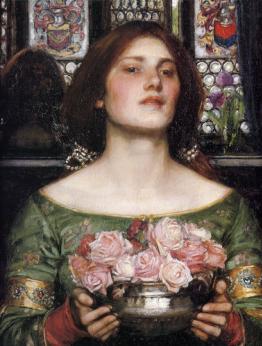
Gather Ye Rosebuds while ye may by J.W. Waterhouse ... was the inspiration for the title of my blog.
Though Waterhouse's 1908 painting was based on a poem by Robert Herrick, I was drawn to the title as a way to convey my hope to Gather together a variety of forms of beauty ... along with links to wonderful websites and blogs ... to inspire and delight.
Welcome!
A detail from Waterhouse's 1909 version of Gather Ye Rosebuds while ye may
"...to find again her childish subtlety and the keenness of her senses that can taste a scent, feel a color, and see – “thin as a hair, as thin as a blade of grass” – the cadence of an imaginary song.” Sidonie-Gabrielle Colette
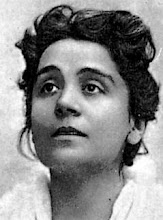
"Eleanora Duse (1859-1924) was the leading Italian actress whom had few peers -- including men. She nearly single handily transformed Italian theater with her astonishingly sophisticated interpretation of roles in contrast to the more stilted acting generally seen in that day." - from the John Singer Sargent Virtual Gallery (click on the photo)


.jpg)


_1868.jpg)


 Posts
Posts